


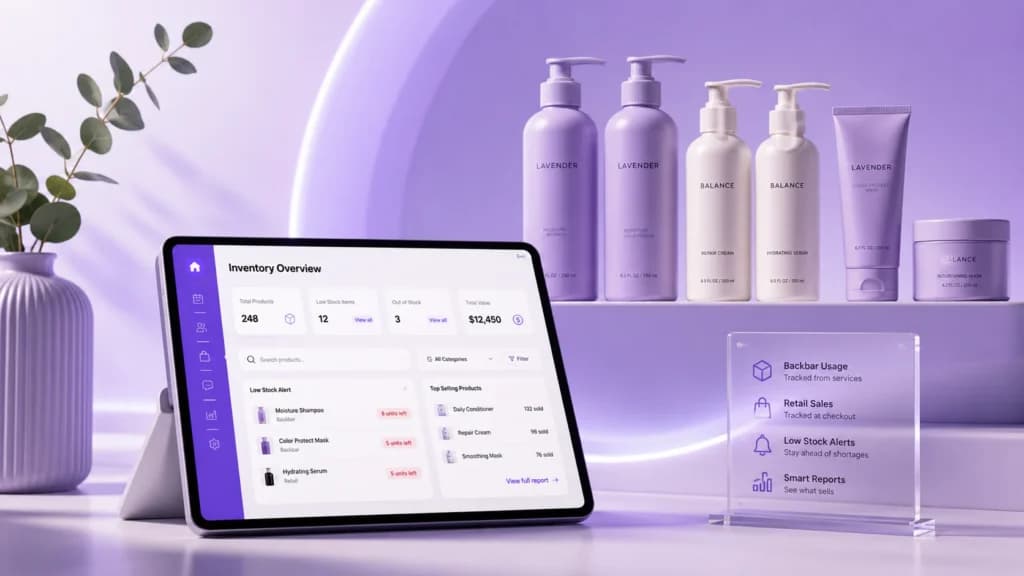
Inventory in a salon or spa is really two things. There’s backbar product your team uses during services, and retail product sitting on shelves waiting to be sold.
Most software tracks one of those well and treats the other as an afterthought.
PandaCue’s Inventory tool tracks both, tying every bottle and unit to the service or sale that used it, so your counts update on their own.
Why Guessing at Stock Costs You
A stylist runs out of color mid-formula. An esthetician can’t finish a facial because the serum ran dry.
These moments feel small, but they lead to rescheduled appointments and clients who notice.

On the retail side, the cost runs the other way. A client asks for the product their provider just used, and it’s not on the shelf.
That sale walks out the door and usually doesn’t come back.
Overordering has its own price. Products expire.
Trends shift, A supply closet full of product nobody’s using is money that isn’t moving through your business.
How PandaCue Keeps Stock Accurate
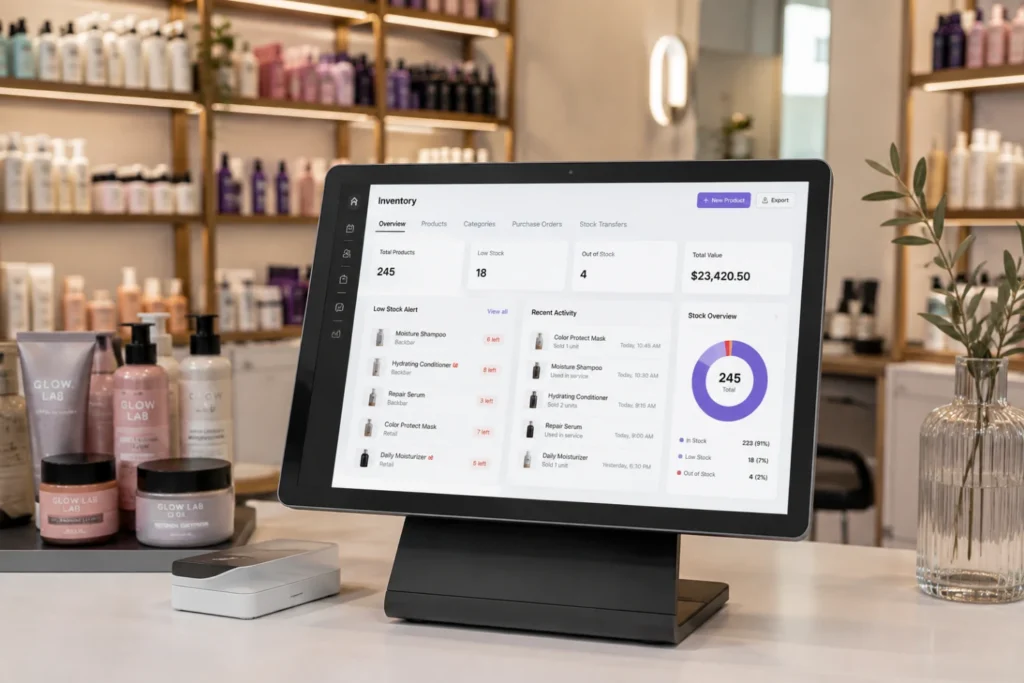
PandaCue’s Inventory tool connects to your calendar and your point of sale, so stock changes the moment product actually gets used or sold, not whenever someone updates a spreadsheet.
Backbar deduction ties to services.
When a service is marked complete, PandaCue can deduct the backbar product tied to that formula, so usage reflects what really happened, not an estimate.
Retail deduction ties to checkout.
Every item rung up through Payments & Point of Sale comes off your shelf count automatically.
No manual reconciliation at closing.
Low-stock alerts catch problems early. You set a threshold for each product.
PandaCue flags it once stock drops below that line, so your team can reorder before a client asks for something you don’t have.
Reporting shows what’s actually selling. Inventory reports break down which products move fastest, which sit on the shelf, and what your cost of goods looks like against retail revenue.
Backbar and Retail Aren’t the Same Problem
Backbar stock needs to be measured against services performed.
Retail stock needs to be measured against sales and shelf appeal.

Treating them as one bucket causes real problems, because the reorder logic for each is different.
PandaCue tracks these as separate categories inside the same tool, so a manager can review backbar usage and retail performance side by side instead of pulling two reports from two systems.
What Changes for Your Team
Your front desk stops fielding “do we have that” questions by walking to the shelf.

The system already knows.
For owners, a physical count every few weeks turns into a dashboard that already flagged what’s low.
That’s hours back every month, spent running the business instead of counting bottles.
A Quick Example
A two-location med spa used to run a full backbar count every other Friday, and retail restocking happened whenever someone noticed an empty shelf, usually too late.
After setting low-stock thresholds and letting service-based deduction run automatically, the Friday count became a five-minute check of the alerts dashboard.
Restocking turned proactive instead of reactive.
FAQs
Does inventory tracking cover both backbar and retail products?
Yes. PandaCue treats them as separate categories, so usage and sales are tracked in the right context.
How does stock update without manual counting?
Backbar stock adjusts when a linked service is marked complete. Retail stock adjusts automatically at checkout.
Can I set different low-stock thresholds per product?
Yes. A high-use item needs a different reorder point than a slow-moving specialty product.
What if I only use backbar supplies, not retail?
The tool still works. You’d rely on service-based deduction and low-stock alerts without the POS side.
Do I still need physical counts?
Occasional counts are still smart for catching shrinkage or damage, but they shouldn’t be your main way of knowing what’s in stock.
Getting Inventory Right
Product waste and stockouts rarely show up as one big number.
They show up as small moments: a rescheduled appointment, a missed retail sale, a bottle that expired unnoticed.
None feel urgent alone, which is why they’re easy to ignore until the totals catch up with you.