

A membership is a recurring plan clients pay for on a set schedule, usually monthly, in exchange for services, discounts, or perks.
A package is a one-time prepaid bundle of sessions, like five facials or ten haircuts, paid upfront and used over time. PandaCue lets you sell, track, and bill both from one system.
If you’re running either one on paper, spreadsheets, or a payment processor that wasn’t built for it, you already know the problem. Credits go untracked. Renewals get missed.
Front desk staff spend their morning double-checking who paid and who didn’t.
Why Memberships and Packages Matter for Your Business
Recurring revenue changes how a salon or spa runs. Instead of guessing what next month looks like, you know a chunk of it is already booked and paid for.
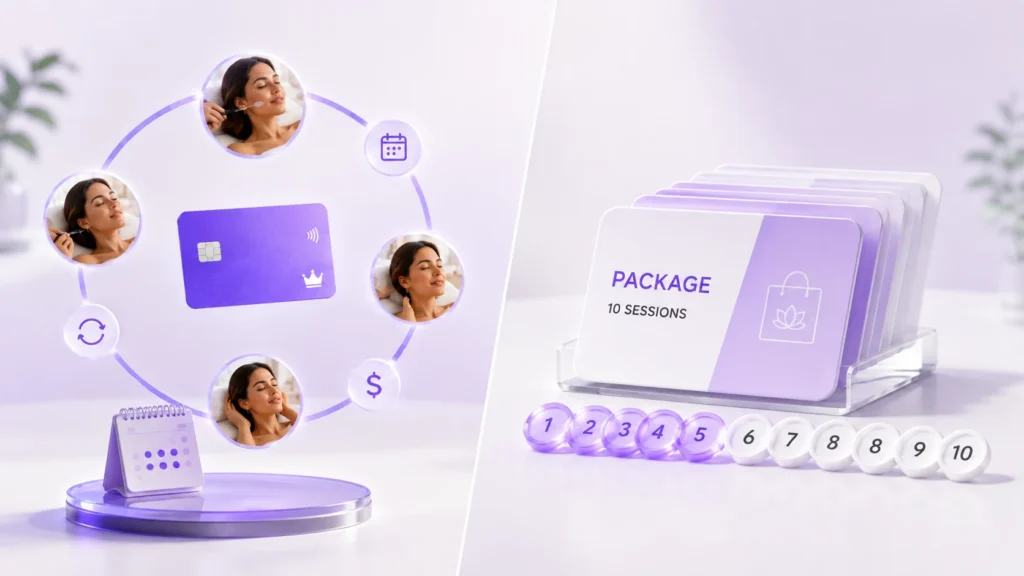
Packages do something different. They bring in cash today for services delivered later, which helps with slow weeks and gives clients a reason to commit past a single visit.
Both tools also do something harder to measure but just as valuable: they turn a client who visits twice a year into someone who shows up every month.
That’s the real difference between a business that’s always chasing new clients and one that keeps the ones it already has.
Memberships vs. Packages: What’s the Real Difference?
People use these words interchangeably, and that’s where confusion starts. They’re not the same thing, and mixing them up affects how you price and sell them.
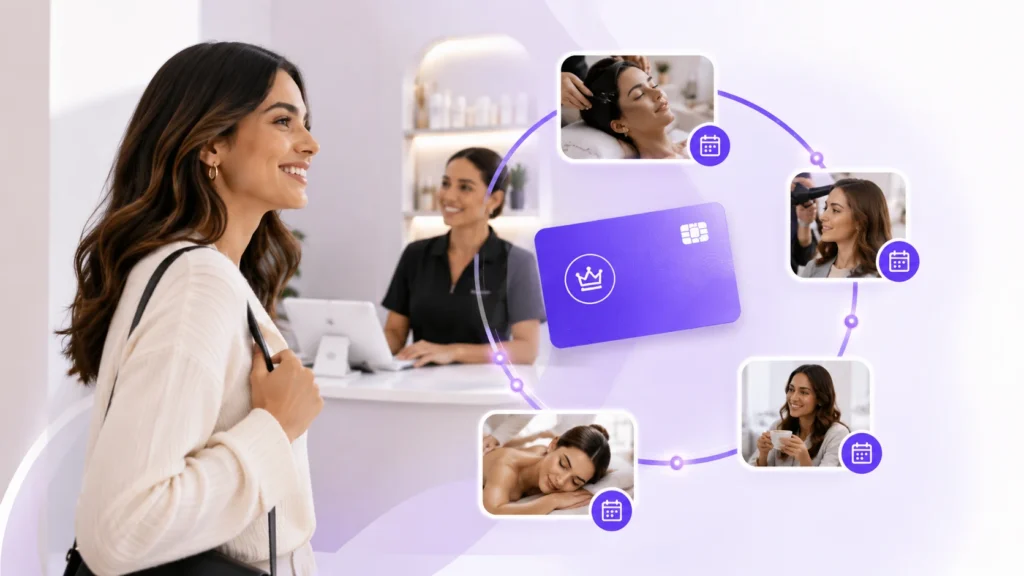
A membership is ongoing
Clients are billed automatically on a recurring schedule and keep getting value as long as they stay enrolled. Think monthly facials, unlimited blowouts, or a discounted rate on every visit.
A package is finite
Clients pay once for a set number of sessions or a dollar amount of credit, use it down over time, and it’s done. No auto-renewal unless you build one in.
Here’s a quick way to decide which one fits: if you want predictable monthly income and a reason for clients to stay enrolled indefinitely, sell a membership.
If you want to move a specific service in bulk, like a facial series or a set of ten massages, sell a package.
How PandaCue Handles Memberships and Packages
PandaCue was built so you’re not stitching together a POS, a spreadsheet, and a separate billing tool just to sell a membership. Here’s what that actually looks like day to day.
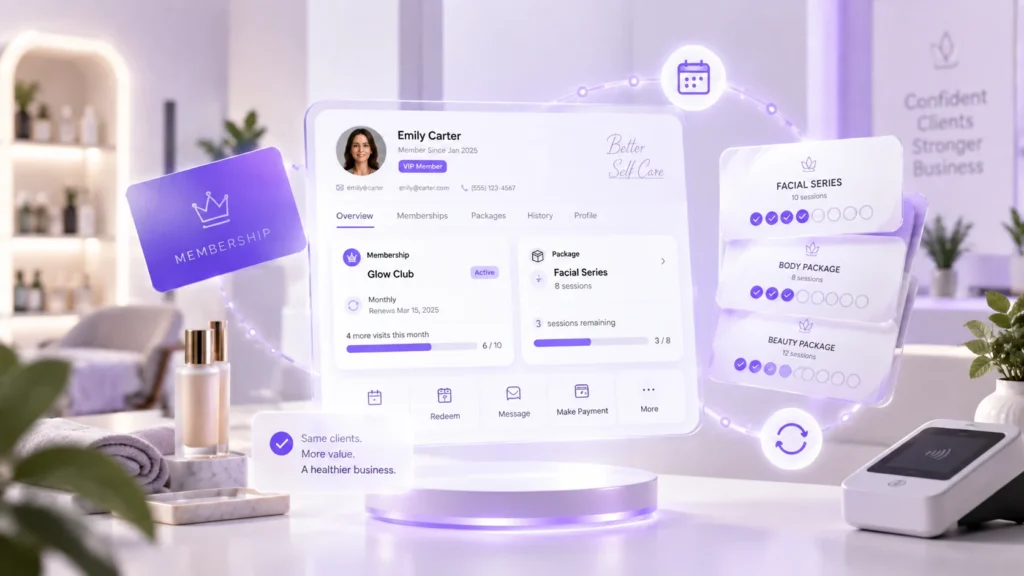
Building a plan
You set the price, the billing frequency, what services or credits are included, and whether it renews automatically. You can create as many tiers as your business needs, from a basic monthly plan to a premium one with extra perks.
Selling it
Front desk staff can sell a membership or package right at checkout, or clients can buy one through your online booking page without anyone at the desk touching it.
Tracking usage
Every time a client redeems a credit or a membership visit, PandaCue logs it against their profile automatically. Staff can see remaining balance in seconds instead of asking a manager to look it up.
Billing on schedule
Recurring membership charges run automatically through PandaCue’s payment processing. You don’t have to remember to charge anyone, and clients don’t get surprised by a missed charge turning into an awkward conversation.
Handling failed payments
When a card declines, PandaCue flags it and can notify the client automatically, instead of a staff member finding out three weeks later that a membership has been running unpaid.
Getting Started: A Simple Way to Structure Your First Membership
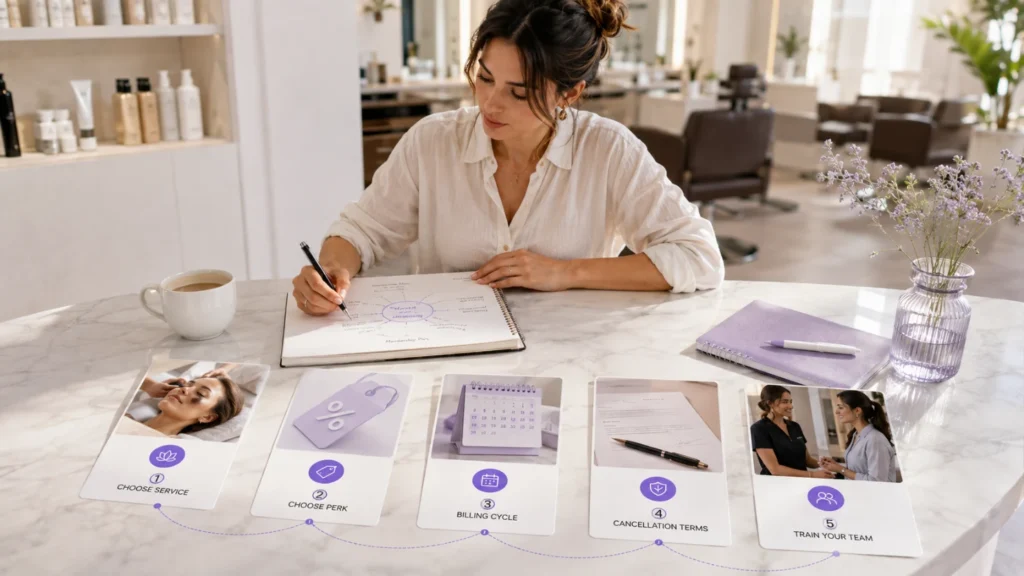
- Pick one service to build around. Don’t launch five tiers on day one. Start with your most popular, repeatable service.
- Decide the discount or perk. A 10 to 15% discount off the normal price is a common starting point, but the size of the incentive should match what your margins can support.
- Set the billing cycle. Monthly is standard for most salons and spas. Some businesses running higher-ticket services use quarterly or annual billing instead.
- Write the cancellation terms. Decide if there’s a minimum commitment, a notice period, or a cancellation fee, and put it in writing before you sell the first plan.
- Train front desk staff to explain it in one sentence. If your team can’t describe the membership simply, clients won’t understand it either.
FAQs
What’s the difference between a membership and a package?
A membership is a recurring plan billed on a schedule, like monthly, that renews automatically. A package is a one-time prepaid bundle of sessions or credit that clients use down over time and doesn’t renew on its own.
Can clients cancel a membership anytime?
That depends on the terms you set. Some businesses allow cancellation anytime with notice, while others require a minimum commitment period. PandaCue lets you set these terms per plan.
Do package credits expire?
Only if you set an expiration date when building the package. Many salons and spas set a 6 to 12 month window to keep credits moving and bookkeeping clean.
How does billing work if a client’s card gets declined?
PandaCue flags the failed charge and can automatically notify the client, so staff aren’t stuck manually chasing down payments during a busy day.
Can I sell memberships and packages online, not just at the front desk?
Yes. Clients can purchase either one directly through your online booking page, without a staff member handling the transaction.
Should a new business start with memberships or packages?
Packages are usually easier to launch first since they’re a single transaction with no ongoing billing to manage. Memberships take more planning around pricing, terms, and cancellation policy, but they build more predictable long-term revenue.
The Bottom Line
Memberships and packages are two of the more reliable ways to smooth out revenue in a salon or spa, but only if the tracking and billing behind them actually works without someone chasing it down every week.
When credits are logged automatically and charges run on schedule, the program pays for its own admin time. PandaCue’s Memberships & Packages feature is built to handle that part, so the only thing left for your team to do is decide what to sell.
Related PandaCue features worth exploring next: Client Management, Payments & POS, Marketing Automation, and Online Booking.